


In the dynamic world of industrial coding and marking, the printing speed of a printhead is a crucial factor that can significantly impact production efficiency and output. As a leading supplier of Allen Coding printheads, I have witnessed firsthand the importance of understanding and optimizing printing speed for various applications. In this blog post, I will delve into the concept of printing speed, explore the factors that influence it in Allen Coding printheads, and discuss how different models perform in real - world scenarios.
Understanding Printing Speed
Printing speed is typically defined as the rate at which a printhead can deposit ink or other marking materials onto a substrate to create legible codes, logos, or other markings. It is usually measured in characters per second (CPS), lines per minute (LPM), or meters per minute (m/min), depending on the nature of the application. For instance, in a labeling application where short alphanumeric codes are printed on small labels, CPS may be the most relevant metric. On the other hand, when marking continuous production lines of products, m/min or LPM becomes more important.
Factors Affecting the Printing Speed of Allen Coding Printheads
Printhead Technology
Allen Coding offers a range of printhead technologies, each with its own characteristics that affect printing speed. For example, thermal inkjet (TIJ) printheads work by heating ink in tiny chambers to create vapor bubbles that expel the ink onto the substrate. TIJ printheads in Allen Coding products can achieve relatively high - speed printing because the heating process is rapid, allowing for quick ink ejection. The Allen Coding KCE - 107 - 12PAT2 - AC Printhead utilizes advanced TIJ technology, which enables it to print at a fast pace while maintaining high - quality markings.

Substrate Material
The type of substrate being printed on can have a significant impact on printing speed. Different materials absorb ink at different rates. For porous substrates like paper or cardboard, the ink is absorbed quickly, allowing for faster printing speeds. However, non - porous substrates such as plastics or metals may require slower printing speeds to ensure proper adhesion and drying of the ink. The Allen Coding 25XL 219520 32MM Printhead is designed to adapt to a variety of substrate materials, but operators may need to adjust the printing speed based on the specific characteristics of the substrate.
Marking Content
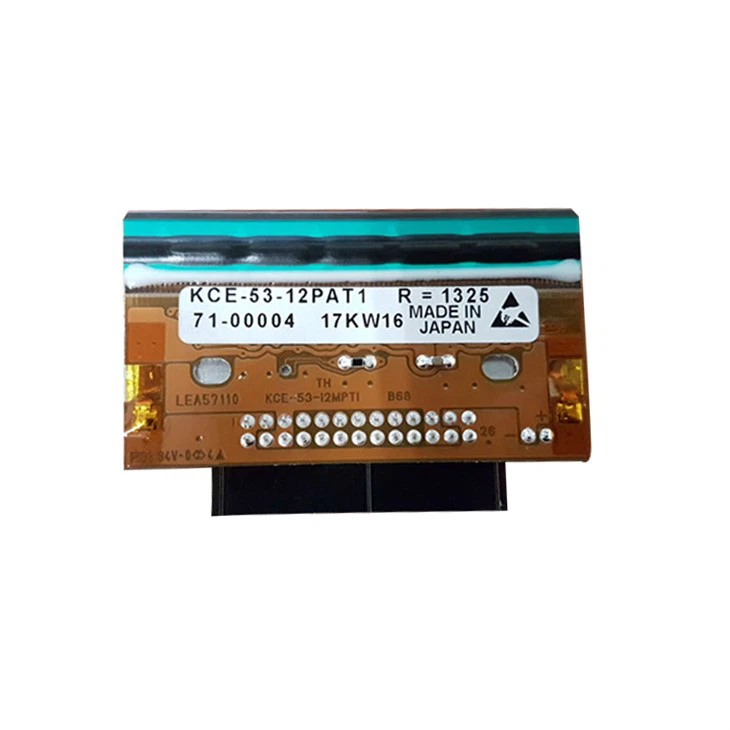
The complexity of the marking content also plays a role in determining printing speed. Simple alphanumeric codes or single - line logos can be printed faster than more elaborate designs with multiple colors or high - resolution graphics. The printhead needs more time to deposit ink in a precise pattern for complex markings. In such cases, the Allen Coding KCE - 53 - 12PAT1 - AC1 Printhead can be configured to optimize speed while still achieving the desired level of marking quality.
Ink Properties
The viscosity, drying time, and flow characteristics of the ink used in Allen Coding printheads influence printing speed. Inks with low viscosity flow more easily through the printhead nozzles, allowing for faster ink ejection. Additionally, inks that dry quickly enable the printhead to move on to the next marking without waiting for the ink to set. The ink formulations used in Allen Coding printheads are carefully selected to balance speed, adherence, and durability.
Real - World Performance of Allen Coding Printheads
In a food packaging plant, the Allen Coding KCE - 107 - 12PAT2 - AC Printhead was used to print expiration dates and batch numbers on cardboard boxes. With a relatively simple alphanumeric marking task on a porous substrate, the printhead was able to achieve a printing speed of up to 600 characters per second. This high - speed performance allowed the plant to keep up with its production line without any bottlenecks in the coding process.
In an automotive parts manufacturing facility, where plastic components needed to be marked with serial numbers and logos, the Allen Coding 25XL 219520 32MM Printhead was employed. Due to the non - porous nature of the plastic substrate and the relatively complex marking content, the printing speed was adjusted to 20 meters per minute. However, the printhead still provided clear and durable markings, ensuring traceability and quality control.
In a pharmaceutical factory, the Allen Coding KCE - 53 - 12PAT1 - AC1 Printhead was used to mark blister packs with dosage information and barcodes. With a combination of text and graphics, the printhead maintained a steady printing speed of 300 lines per minute while meeting the strict regulatory requirements for legibility and accuracy.
Optimizing Printing Speed
To get the most out of Allen Coding printheads in terms of speed, proper maintenance is essential. Regular cleaning of the printhead nozzles prevents clogs, which can slow down the printing process and affect marking quality. Additionally, using the recommended inks and adjusting the print settings based on substrate and marking content can help optimize speed.
Training operators on the correct use of the printheads is also crucial. A well - trained operator can quickly identify and address any issues that may arise during the printing process, ensuring continuous and efficient operation.
Conclusion
The printing speed of Allen Coding printheads is a multi - faceted aspect that depends on various factors such as printhead technology, substrate material, marking content, and ink properties. By understanding these factors and optimizing the printing process, businesses can achieve high - speed, high - quality coding and marking in their production lines.
If you are interested in improving the efficiency of your coding and marking operations or have any questions about the printing speed or other features of our Allen Coding printheads, we encourage you to reach out to us for a detailed discussion. We are committed to helping you select the right printhead for your specific needs and provide you with the support to ensure optimal performance.
References
- Industry reports on industrial coding and marking technologies.
- Internal technical documentation of Allen Coding printheads.


